.avif)
I Have a Product Idea. What Should I Do Next?
You've had the idea. Maybe it came to you in the shower, maybe it's been rattling around your head for years. You know there's something in it. But now what?
This is one of the most common questions we hear from founders at the start of their journey and it's a good one. Because the honest answer isn't "start designing." It's more nuanced than that and getting this early-stage right can save you years of wasted effort and a significant amount of money. Most startup failures don't happen overnight, the seeds of failure are often present from the very beginning. Decisions made in the earliest stages can have a profound impact on the outcome of a product, which is why it's so important to get the fundamentals right.
By following the process outlined in this article, you'll give your idea the best possible chance of becoming a successful product and avoiding the common pitfalls in product development.
Here's what we'd actually advise.
Step 1: Write Your Idea Down Properly
This sounds obvious, but most people skip it. A proper written articulation of what the product does, who it's for, and what problem it solves.
Force yourself to answer these three questions clearly:
- What does it do? (Not just what it is, what it does for someone)
- Who is it for? (Be specific, "everyone" is not an answer)
- Why doesn't that person already have a good solution? (This is the gap you're filling)
If you can't answer all three cleanly, that's useful information. It tells you where your thinking is still fuzzy and that's the work to do before anything else.
Step 2: Do a Quick Market Reality Check
Before you invest serious time or money, spend a few hours honestly stress-testing whether this idea has commercial legs. This isn't about writing a business plan, it's about asking the right questions early.
Search Amazon, Google Shopping, specialist retailers. Look at what already exists. If nothing like your idea is out there, that might mean you're onto something genuinely new or it might mean others have tried and failed. Both are worth investigating.
Look at who's buying in this space. Are there active communities, publications, influencers, or brands serving this audience? A healthy market ecosystem is usually a good sign that paying customers exist.
And talk to real people. Not your friends and family, actual potential users. Ask them about the problem, not the solution. Their language, their frustrations, and the workarounds they already use will tell you more than any desk research.
Step 3: Talk to a Product Design Consultancy
This one surprises some founders, who assume they need to have everything figured out before approaching a design team. In reality, the opposite is true. Learn more about when to engage with a design consultancy here.
A top product design consultancy has seen hundreds of ideas at exactly this stage. They know where the hidden costs are. They know which product categories carry regulatory complexity. They know whether your idea is technically feasible and roughly what it would cost to develop. That knowledge is invaluable before you've committed serious budget.
A good consultancy won't try to sell you a full design project on your first conversation. They'll give you an honest assessment of where your idea stands, what questions still need answering, and what a sensible development path looks like. At Flynn, we run structured discovery sessions specifically for founders at this point, the goal is to give you clarity, not close a deal.
Getting expert input early shapes everything that follows. The steps below will be sharper, more focused, and more commercially grounded if you've had that conversation first.
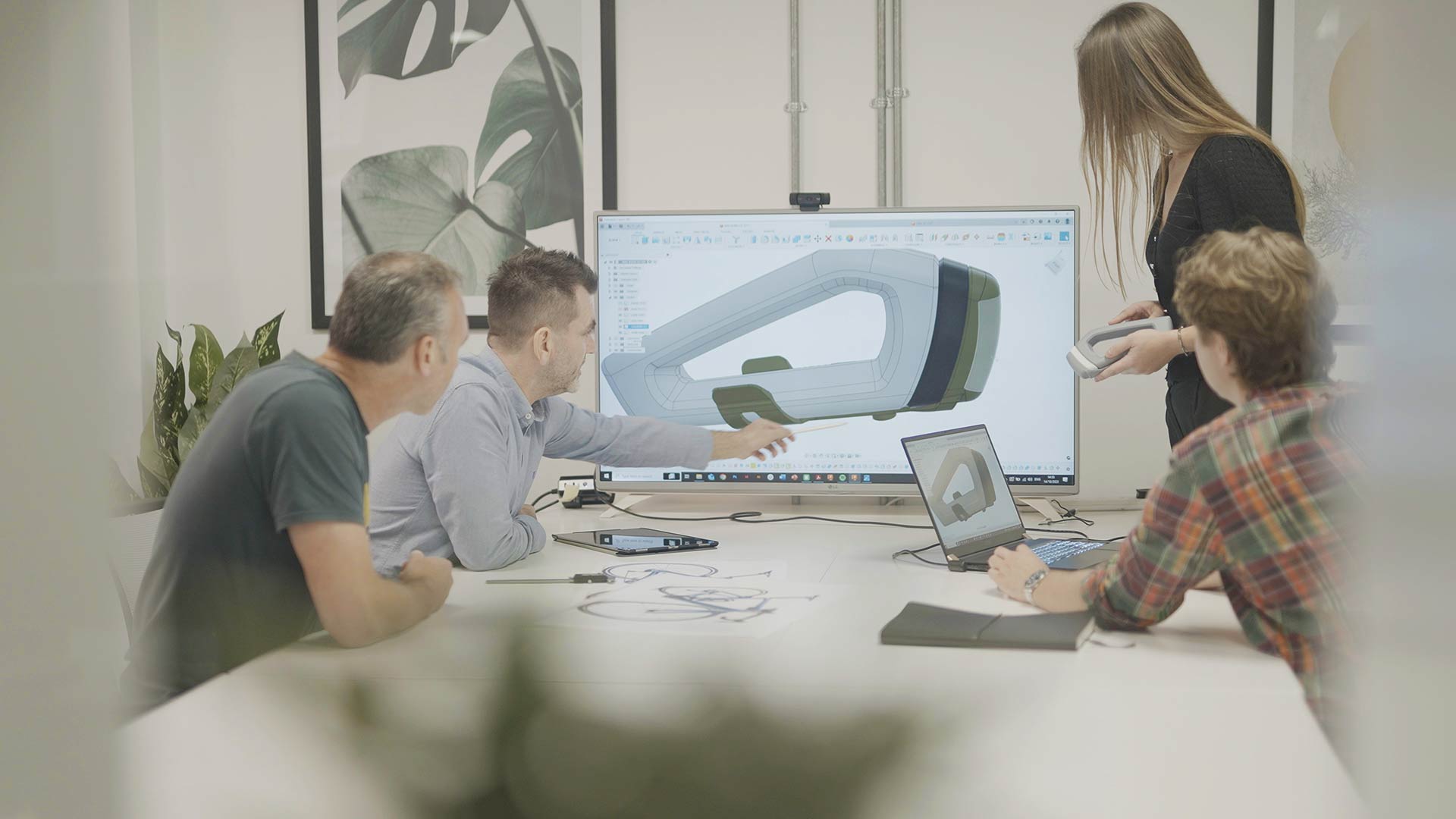
A top product design consultancy should guide you through the following steps:
Step 4: Drill Down Into the Problem You're Solving
With early expert input in hand, now it's time to go deep on the problem itself, not the solution.
This is a discipline that separates founders who build products people actually buy from those who build products they personally love. The two are not always the same thing.
Ask yourself: what is the root cause of the problem your product addresses? Who experiences it most acutely? How often, and in what context? What do they currently do instead and why is that inadequate?
The more precisely you can define the problem, the better the solution you'll ultimately design. Vague problems produce vague products. Sharply defined problems produce products with a clear reason to exist.
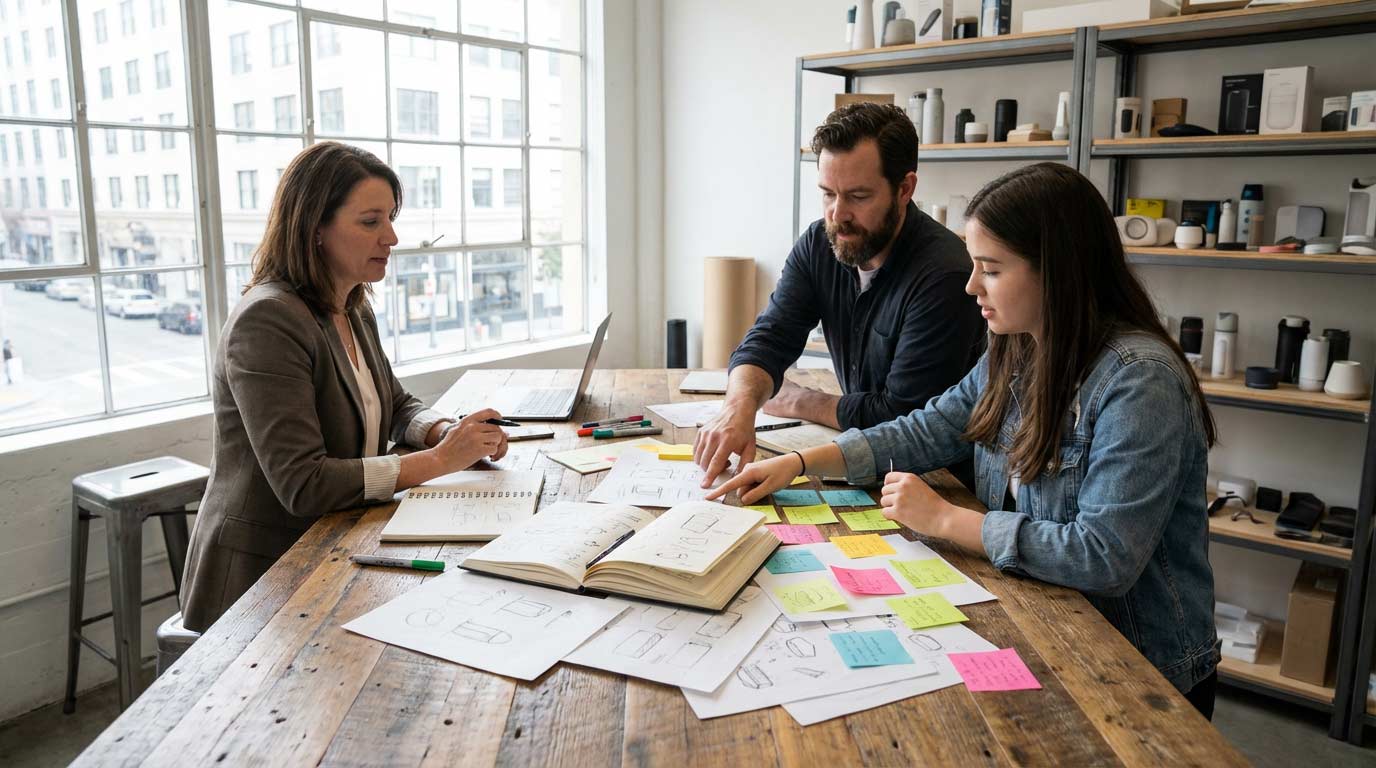
Step 5: Analyse and Stress-Test Your Solution
Now look critically at your solution. Does it actually solve the problem you've just defined or does it solve the problem you assumed existed?
Think about the physical nature of what you're proposing. Physical products carry constraints that digital ones don't: they have to be manufactured, shipped, packaged, and used in the real world. A solution that works perfectly in your head may introduce new problems, in cost, complexity, or usability, once it's translated into a physical object.
Consider also whether your solution is genuinely better than what exists, or just different. "Better" can mean more effective, simpler, cheaper, safer, more sustainable, or more pleasurable to use. But it needs to mean something tangible to the person buying it.

Step 6: Explore All Possible Design Directions
One of the biggest mistakes early-stage founders make is falling in love with a single solution before they've explored the alternatives. At this stage, breadth matters more than depth.
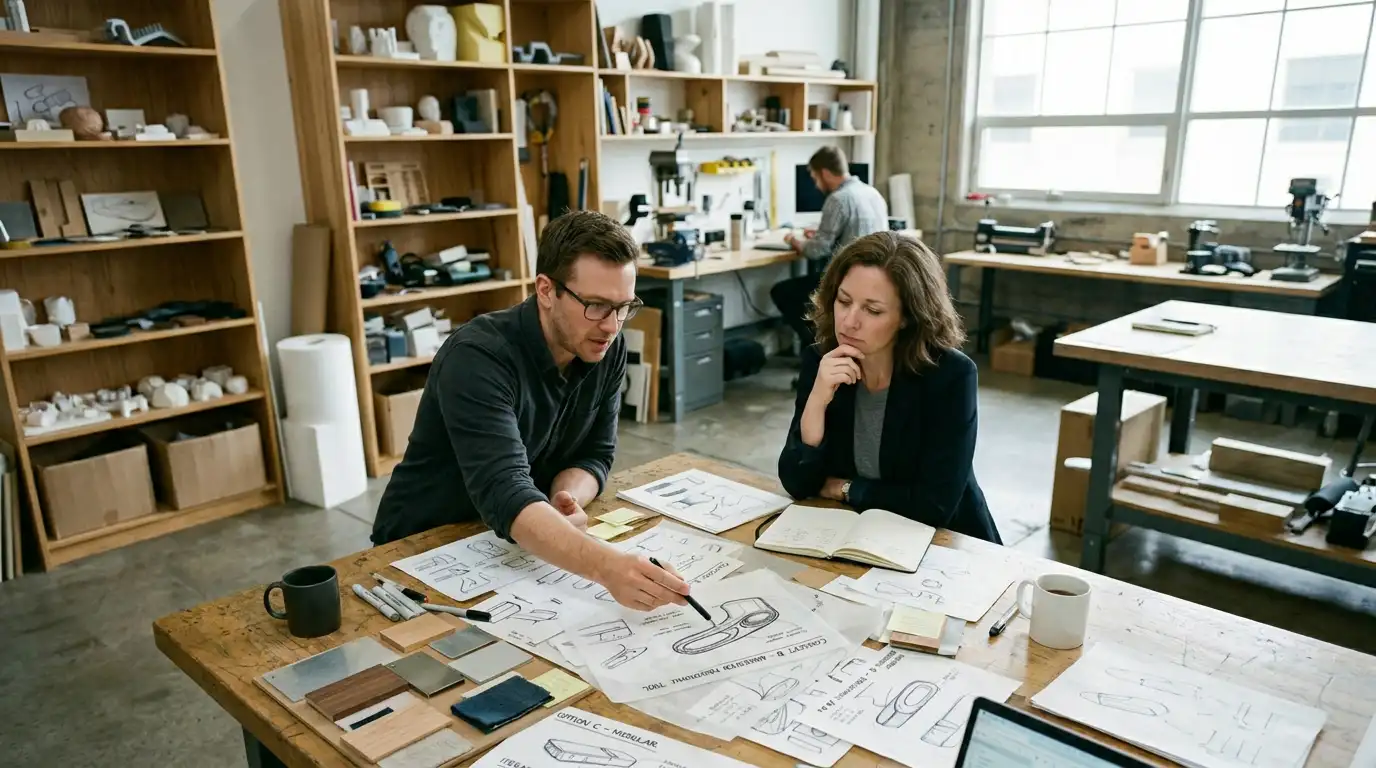
Work with your design team to explore multiple directions and opportunities. Some will be eliminated quickly on cost or feasibility grounds. Others will reveal possibilities you hadn't considered.
This exploration phase is where physical product design gets genuinely exciting. The best products often emerge not from the first idea, but from the collision of two or three ideas that individually wouldn't have been enough. Keep an open mind for longer than feels comfortable.

Step 7: Assess the Competitive Landscape
By now you have a clearer sense of what you're building and why. It's time to look properly at who else is playing in this space.
Go beyond a surface-level search. Buy the competitor products if you can. Use them. Understand their strengths and weaknesses from the user's perspective. Look at their reviews, the one-star ones as much as the five-star ones. That's where the real insight lives.
Look at how they're positioned and priced. Is the market crowded in the middle and thin at the premium end? Is there a brand doing the same thing but serving a different demographic? Competitive analysis isn't about copying or avoiding, it's about finding where your product genuinely has room to win.
Step 8: Build Your Business Case
Before you write a brief or begin formal development, you need to be confident that the numbers work. A great product that can't be sold profitably isn't a business.
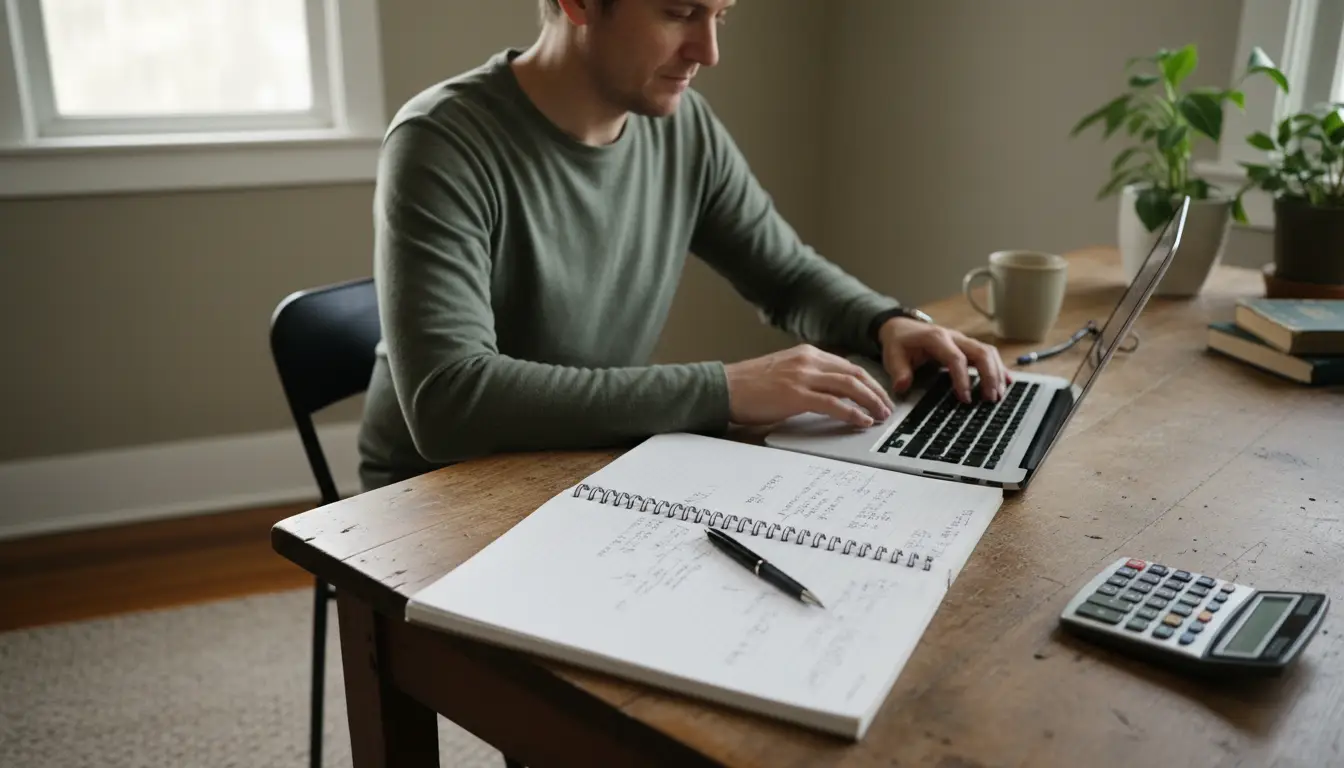
Work through the basics: What is the market size? What will the market bear in terms of price? What margin does your route to market require, whether that's direct to consumer, retail, or B2B? What's the minimum volume you'd need to sell to break even?
This doesn't need to be a forensic financial model at this stage, but it does need to be honest. If the unit economics don't work at achievable volume, that's important to know now, not after you've spent six figures on tooling.
Step 9: Write Your Brief and Product Design Specification
Now you have everything you need to write a proper brief. This is the document that will guide your entire development process, so it's worth taking seriously.
A good product brief covers the problem being solved, the target user, the key functional requirements, the design constraints, the commercial parameters (target cost, retail price, route to market), and the project timeline and milestones.
A product design specification (PDS) goes further, it captures the technical requirements in detail, including performance criteria, safety standards, and manufacturing requirements. This document evolves as the project develops, but starting with a solid foundation keeps everyone aligned and reduces costly misunderstandings downstream.
This stage is key, a product can never be better than its brief, just like a goldfish can’t outgrow its bowl. It is worth dedicating the time to work through this stage properly. At FLYNN we will help guide you through this, optimising your brief and specification for commercial success.
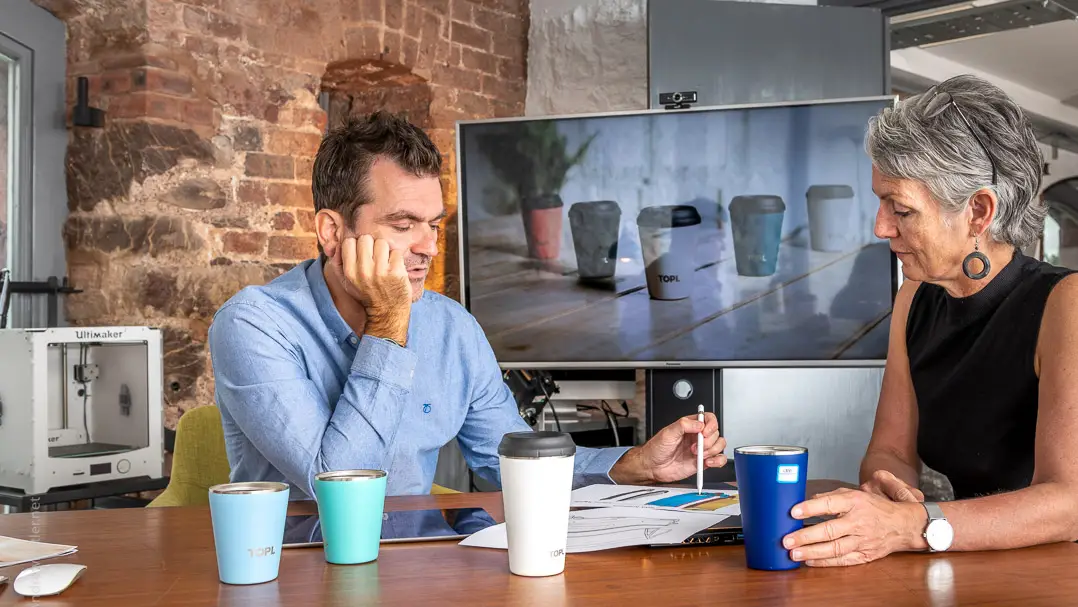
Step 10: Begin Product Development With Your Design Team
With a clear brief, a validated concept, and a sound business case, you're ready to begin your product development journey.
This is where design and engineering work in earnest, refining concepts, building prototypes, testing, iterating. For physical products, this process typically moves through concept design, detailed design, prototyping and testing, design for manufacture, and pre-production. Each stage has its own cost, timeline, and risk profile.
The founders who navigate this process best are the ones who stay engaged, ask questions, and trust the expertise of their development team, while keeping the commercial reality of the project firmly in view. The brief you've written is your north star. When decisions get difficult, come back to it.

One Final Though
The founders who succeed at bringing physical products to market aren't always the ones with the best original idea. They're the ones who move methodically, ask the right questions early, are open to change and exploring alternative opportunities and surround themselves with the right expertise before they've burned through their budget.
If you're at step one and wondering whether your idea is worth pursuing, the best thing you can do is have an honest conversation with people who've done this many times before. Not a pitch, a real conversation about whether and how your idea can become a real product.
That's what we're here for.
Flynn is an award-winning product design consultancy working with startup founders and emerging brands to bring physical products to market, from first concept through to design for manufacture. If you have an idea you'd like to explore, get in touch.
We provide businesses with product design consultancy, industrial design, prototype design & related services.