.avif)
Do I Need an Industrial Design Agency or a Product Design Agency for My Idea?
If you've started researching how to bring a physical product idea to life, you've probably noticed that "industrial design" and "product design " get used almost interchangeably, sometimes by the same studio, on the same page. In the UK, that's generally how the market talks. But underneath the loose usage there's a real distinction, and how much it matters for you depends entirely on who you end up hiring, because different firms split this work in very different ways.
If you're looking to take an idea into production, you need a partner who is strong in both industrial design and product design. By working with a top Industrial Design Agency, like Flynn, you will benefit from a team that will focus on both disciplines under one roof to deliver a product that isn't just aesthetically beautiful, but also well-engineered, innovative, taken through DFM (design for manufacture), and commercially viable.
The Technical Distinction
Strip away the marketing language and the two disciplines are, technically, different in scope.
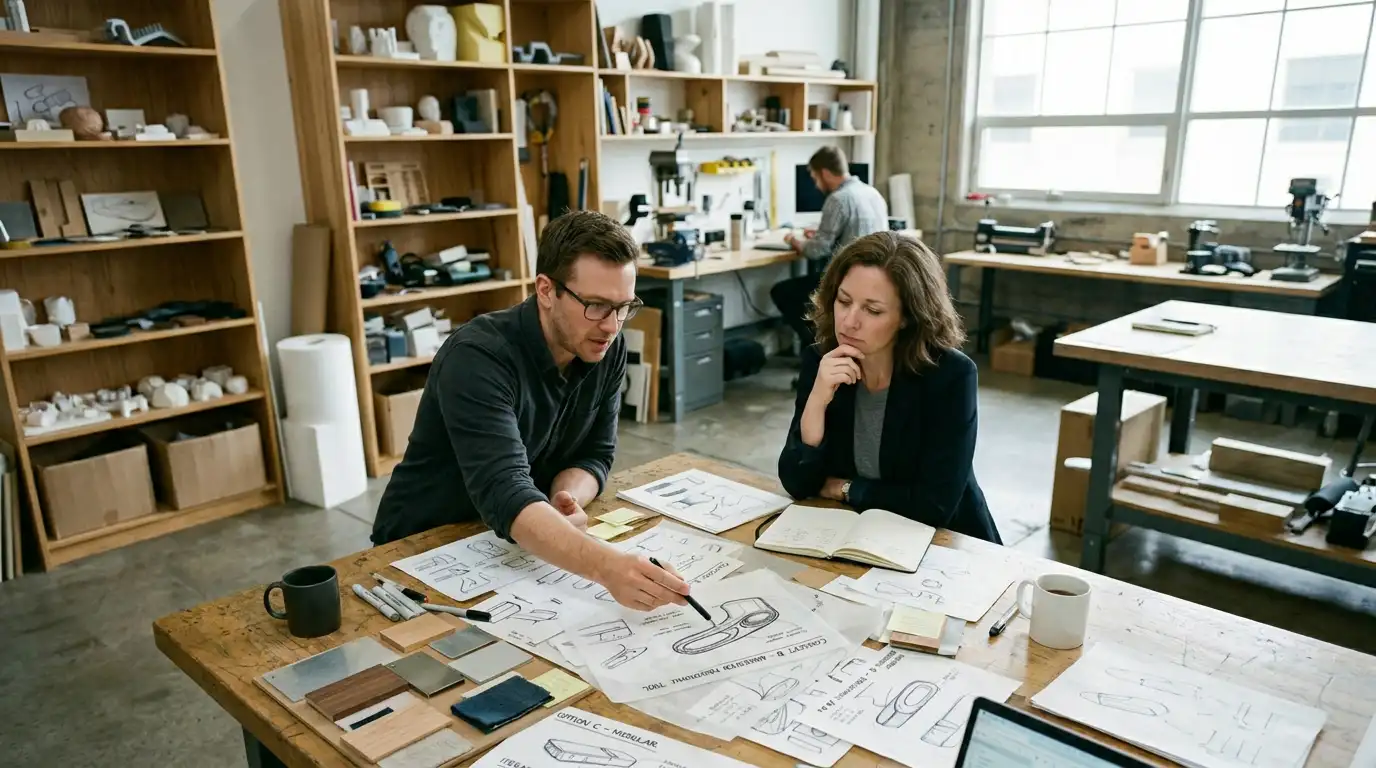
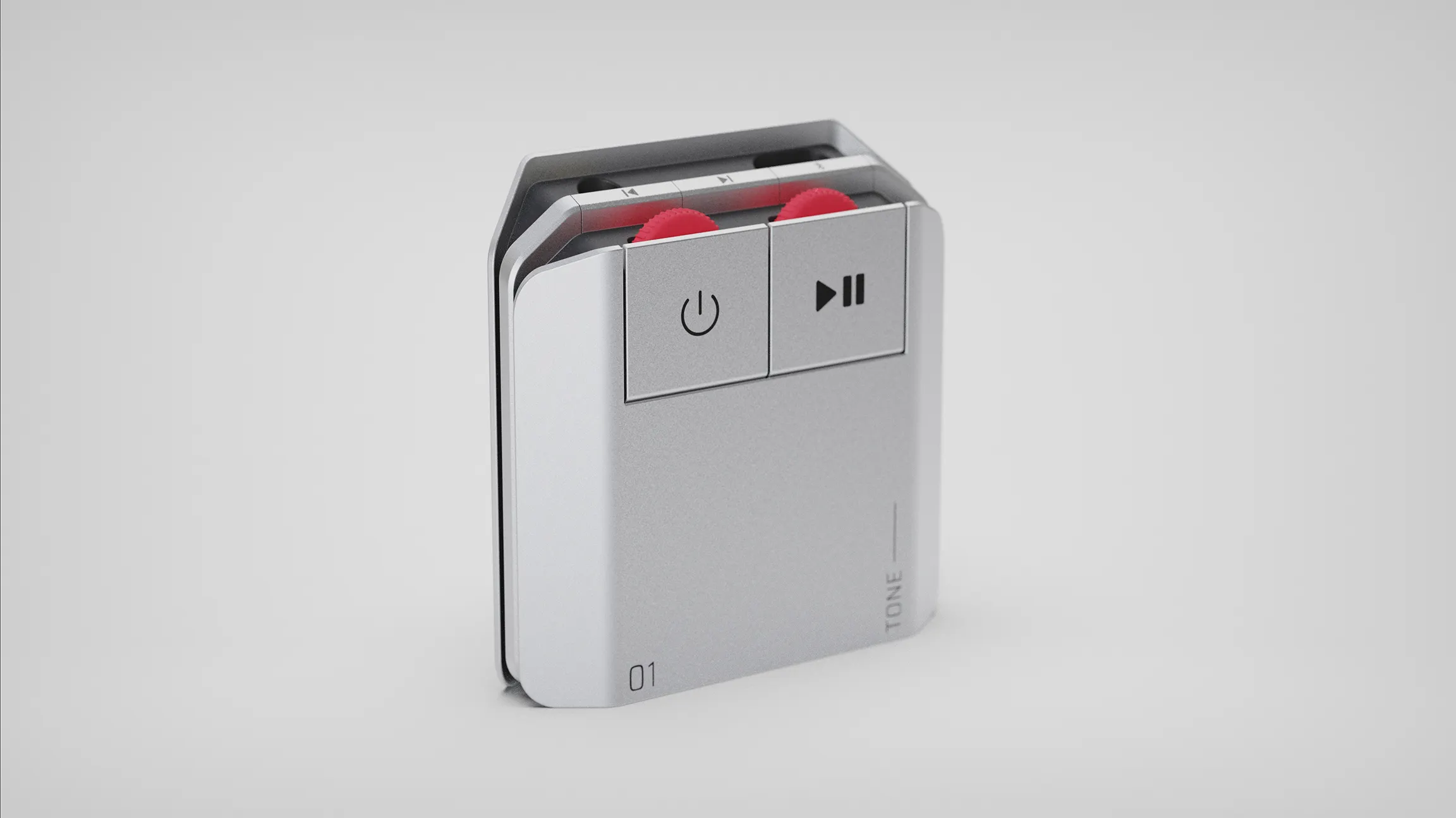
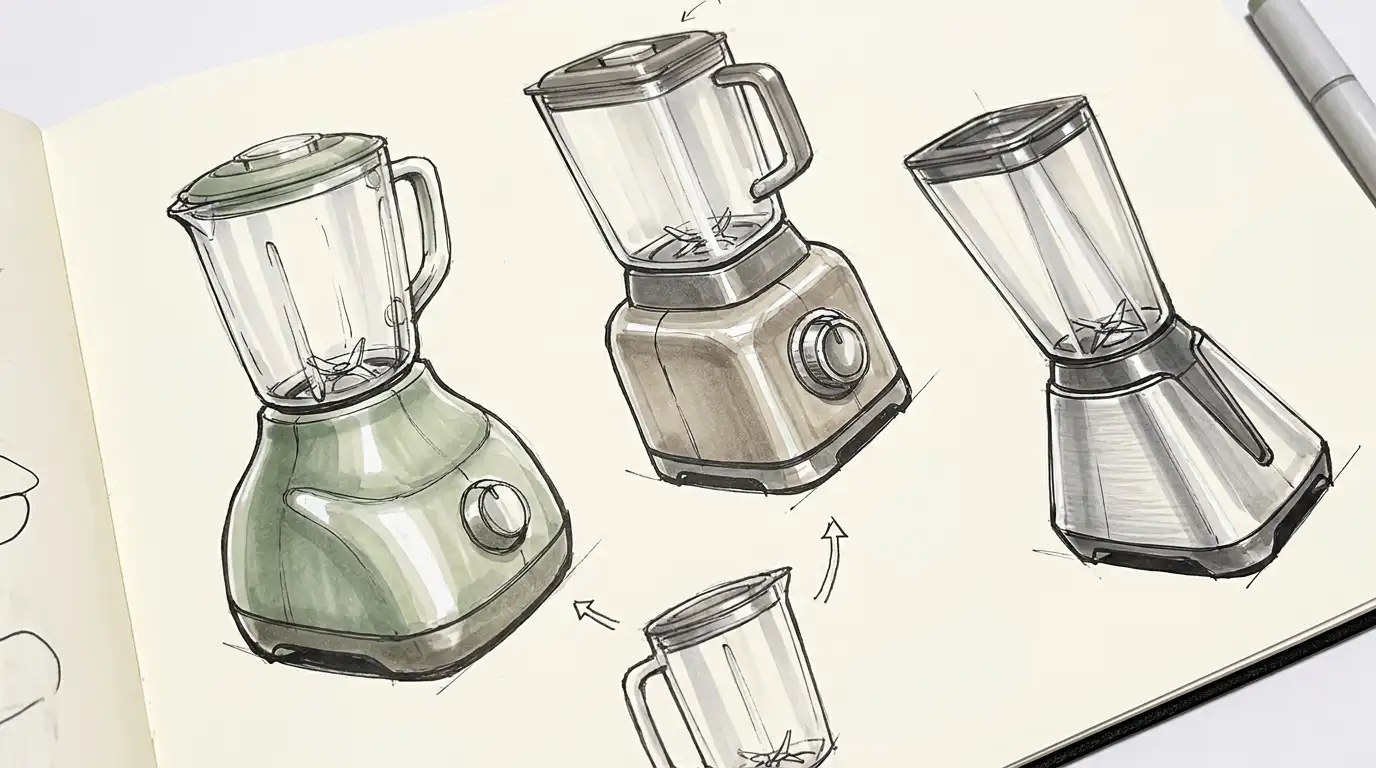
Industrial Design is focused on the aesthetic design of a product, the form, the A-surfaces, the CMF (colour, material, finish). It's the discipline concerned with how a product looks, feels in the hand, and reads as an object. Concept sketches, 3D form exploration, surfacing, material and finish selection: this is industrial design's home turf.
Product Design, in the fuller sense of the term, goes a step further. It covers everything industrial design covers, plus the engineering, the function, the mechanisms, and critically, DFM (design for manufacture): making sure what's been designed can actually be built, at the right cost, at the right volume, without the aesthetic falling apart the moment it meets a tooling constraint.
That fuller, engineering-inclusive definition of "product designer" is more the American usage of the term. It's a useful distinction to know, because it explains a lot of the confusion founders run into when comparing studios, portfolios, or job titles across the Atlantic.
Why "Industrial Design" is Having a Moment in the UK
"Industrial design" as a term historically is more common in America, you'll still hear "Industrial Design Company" used more readily over there than you typically would in the UK. But that's shifting. In the UK, "product design" doesn't map onto the American definition quite so cleanly, and two things are happening at once.
First, the two titles are simply used more loosely here, you'll see "product design" applied to roles that are really industrial design, and vice versa, without much consistency between studios.
Second, and more significantly, "product design" has been increasingly claimed by the tech and software world, where it now overwhelmingly means UX/UI design, screens, flows, digital interfaces. None of that involves a physical object at all. As that usage becomes dominant, "product design" is drifting away from physical product work in the public's mind. In response, "industrial design" a term with those American roots is becoming the term UK physical product studios reach for instead, specifically to signal this is physical, not digital.
If you're a founder with a physical product idea searching for the right partner, this matters: you need to read past the title on the website and look at what the studio actually delivers.
Not Every Studio Splits This the Same Way
Here's the part that causes the most confusion in practice: consultancies don't all treat industrial design and engineering-led product design as the same discipline, some deliberately keep them separate, and it shapes what you get.
Some studios are strong on industrial design specifically, and stop there. That can be exactly what you want if you're early, doing creative exploration, generating concept directions, figuring out what the product could look and feel like before you've committed to anything. Where it tends to fall short is downstream, when concepts need to survive contact with real manufacturing constraints.
Other studios are heavily engineering-focused. They're excellent at solving hard technical problems and pushing genuine innovation, but aesthetics can end up an afterthought, and products that are technically brilliant but visually unremarkable are a much harder sell in a crowded market.
Neither approach is wrong. But it means the question "do I need an industrial designer, or a product designer" is really a proxy for a bigger question: what type of studio do I need and a lot of founders don't realise that split exists until they're partway into a project with the wrong one.
Why a Product Going Into Production Needs Both
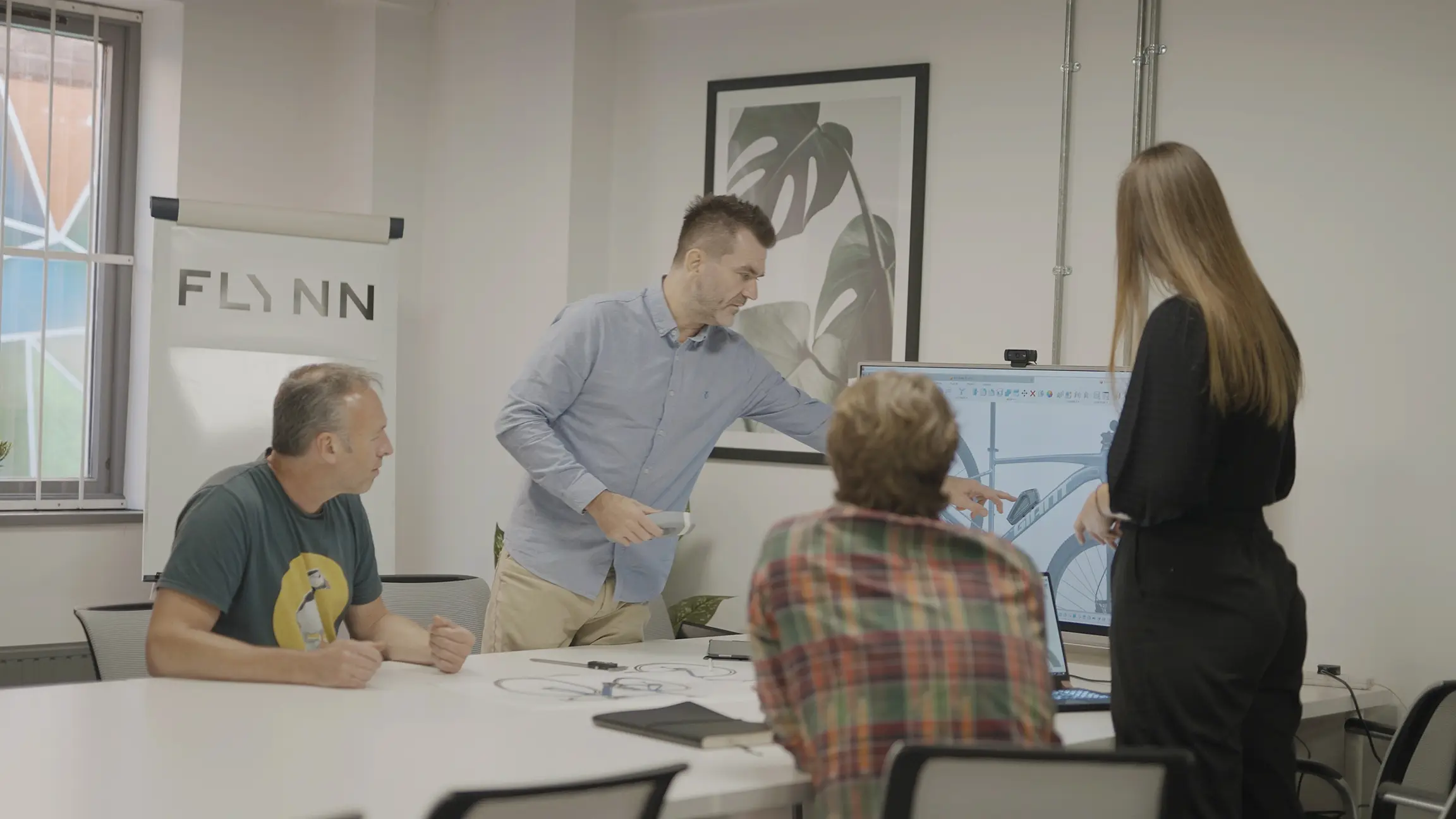
If you're taking an idea from scratch through to a manufacturable, sellable product, you need both halves of this. You need the aesthetic and experiential design, the thing has to look right, feel right, and hold its own on a shelf or in a pitch deck. And you need the engineering and DFM discipline underneath it, or the beautiful concept you fell in love within the studio never survives the transition to a real factory, a real bill of materials, or a real unit cost.
Split those two disciplines across separate firms and you introduce a handoff and handoffs are where quality, manufacturability, and budget most often slip. A surface designed without engineering input gets re-worked (or ruined) once DFM is applied. An engineering-led design that never had proper aesthetic input ends up functional but forgettable.
Where FLYNN Fits
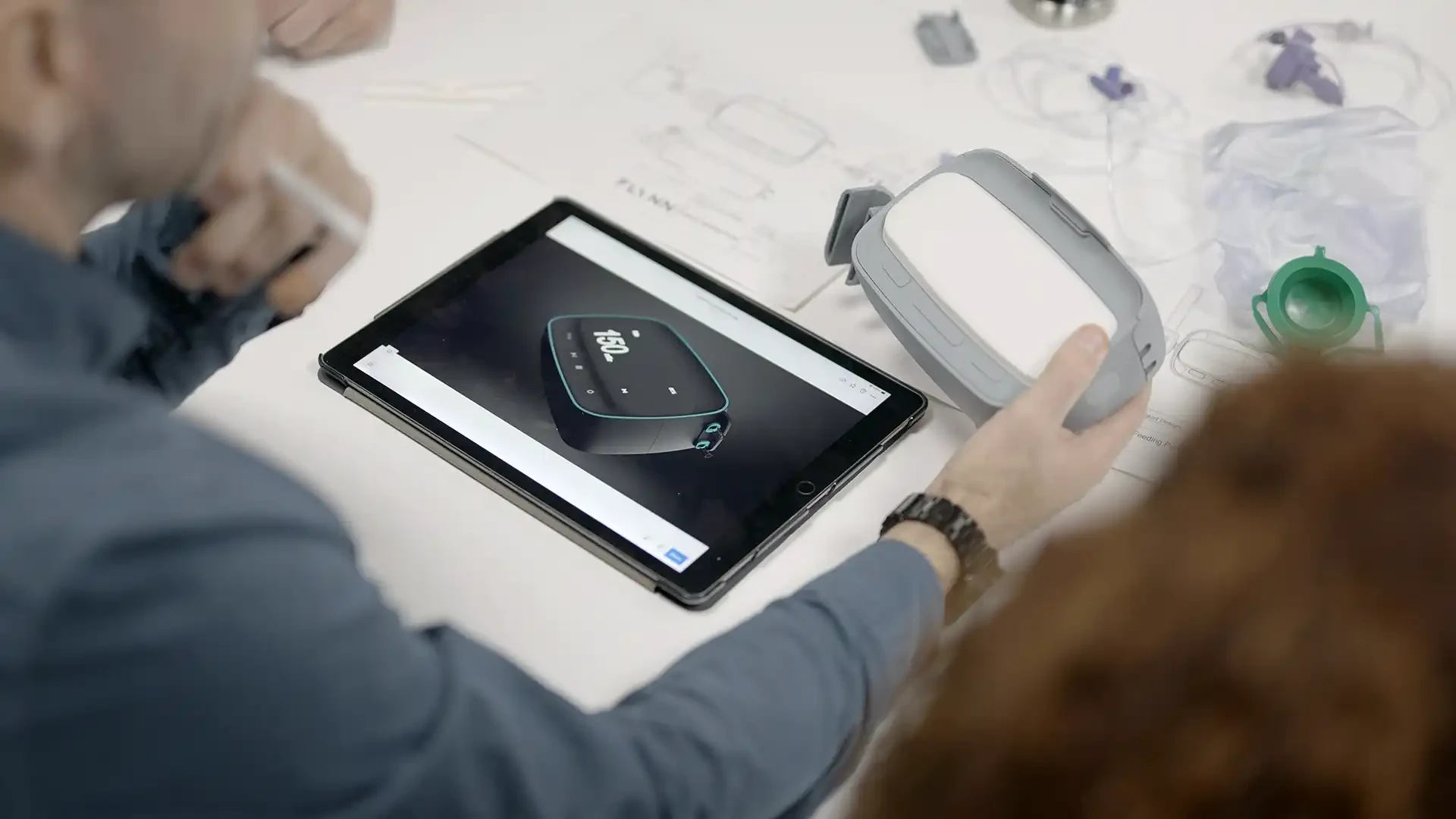
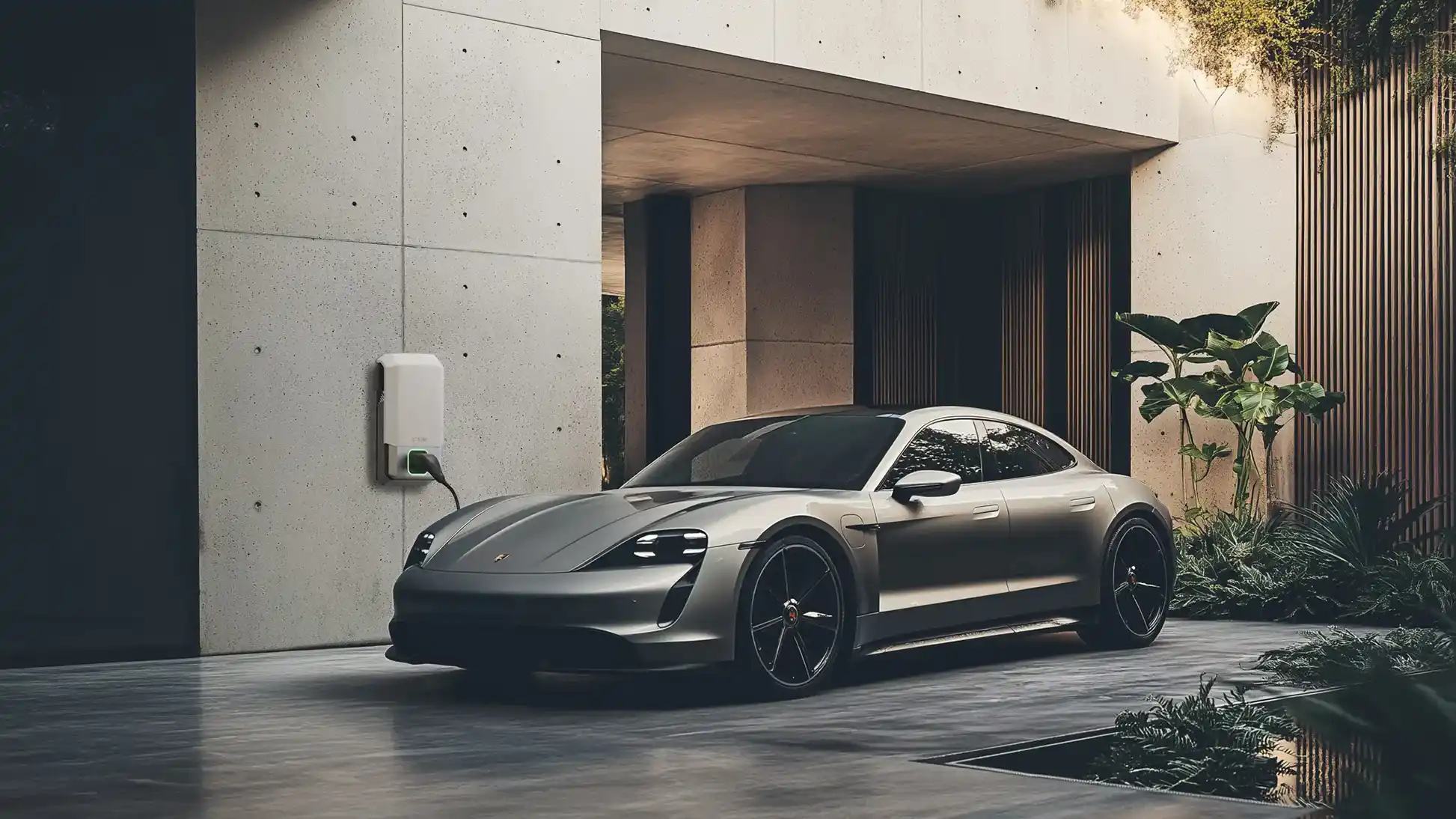
At Flynn, we don't treat these as separate disciplines to be handed off between teams we cover both under one roof, as a turnkey physical product design and development service. Aesthetics and engineering are given equal weight throughout the process, which means the products we develop aren't a compromise between "beautiful" and "buildable." They're designed to be both: genuinely well-designed objects that are also properly engineered, manufacturable, and commercially viable at the volumes our clients actually need.
So, Which Do You Need?
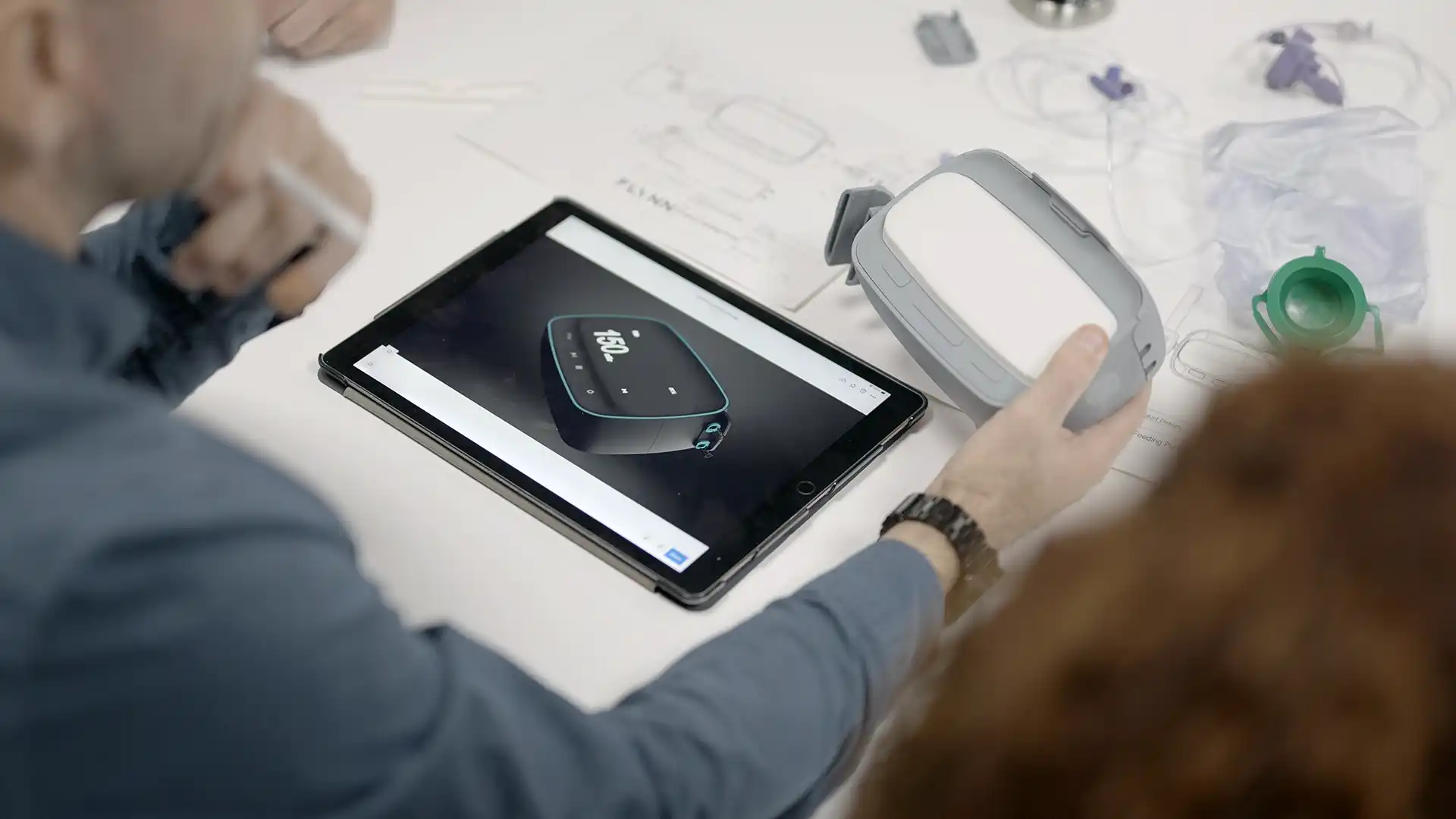
If you're developing a physical product from scratch through to production, the honest answer is: both. Not a studio that's brilliant at concept sketches and hands you off elsewhere for engineering, and not a studio that's brilliant at solving technical problems but treats the aesthetic as secondary. You need a firm that takes both seriously, under one roof which is exactly how Flynn is set up to work.
We provide businesses with product design consultancy, industrial design, prototype design & related services.