In-House Designer vs Product Design Consultancy: Which Is Right for Your Company?
Most companies developing a physical product reach the same question sooner or later: hire an in-house designer, or work with an external product design consultancy? For new product development, the answer is usually to work with an industry leading product design consultancy. An external team brings a perspective that isn't shaped by company culture or past decisions. It also gives you a full spread of industrial design and engineering skills, rather than one person's strengths, and capacity that flexes with the project instead of a fixed headcount.
That holds whether you're yet to make your first design hire or already have an established in-house team. In-house designers have real strengths, and we look at where they fit best further down. But when the goal is a new product that moves things forward, outside thinking is where most of the value lies. That said, not every consultancy will deliver these benefits. They depend on choosing the right one: a team that covers full spectrum product development under one roof, with a proven process and the experience to back it up. That's the kind of partnership this article describes, and the standard we hold ourselves to at Flynn.
The value of an outside view

The biggest difference an external consultancy brings is hard to put on a spreadsheet: we see things differently.
Every company develops its own way of doing things over time. There are preferred suppliers, design conventions that have quietly become habits, decisions made years ago that nobody questions anymore, and opinions that carry weight because of who holds them rather than whether they're right. None of this is a criticism. It's what naturally happens when people work on the same products for a long time, and in larger companies it tends to run deeper.
The effect on product development can be subtle. A new product inherits the limitations of the last one because "that's how our products work". A promising idea gets dropped because it would mean challenging a decision made by someone senior. A design ends up shaped as much by internal approval processes as by what the end user actually needs.
An external team arrives without that history. We have no attachment to legacy decisions, no position in the organisation to protect and no reason to defer to how things have always been done. That means we can ask the obvious questions, say plainly when something isn't working and make recommendations based on one thing: what will make the best product.
What else a consultancy brings
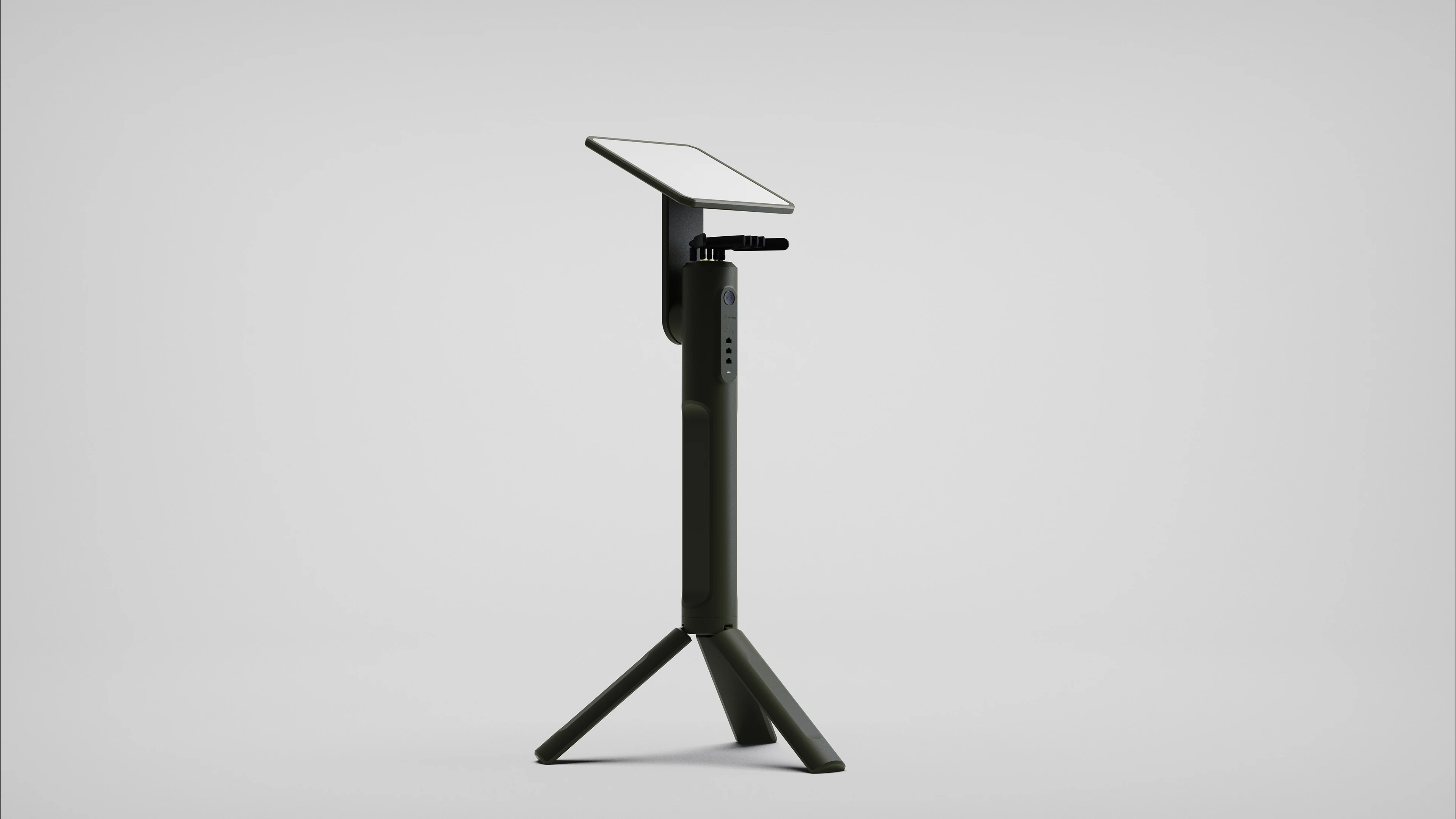
Breadth of experience. A consultancy works across many sectors and product types. At Flynn that includes consumer health and wellness, medtech, wearables and connected devices to name a few. A material, mechanism or manufacturing approach that solved a problem in one sector is often the answer to a problem in another. An in-house designer focused on one product line rarely gets that exposure.
Industrial design and engineering together. Taking a physical product from concept to manufacture needs two different skill sets. Industrial design shapes how the product looks, feels and is used. Product engineering makes it work and makes it manufacturable. Most individual designers are stronger in one than the other. A consultancy can put both on a project from day one, so the product is attractive, functional and commercially viable.
Speed. A team that has taken many products through prototyping, testing, design for manufacture and production knows where the pitfalls are. That experience shortens the learning curve and reduces the risk of expensive rework later on. A consultancy can also get going straight away. There's no recruitment process and no need to train anyone up on your tools or ways of working, so work can start as soon as the brief is agreed.
If you don't have an in-house designer yet
For companies without a design function, hiring a designer can look like the obvious first step. It's worth looking at the full cost before committing.
The salary is only part of it. There's recruitment, employer costs, CAD and rendering software licences, a workstation capable of running them, prototyping equipment such as 3D printers, and the management time needed to direct and support the role. There's also the risk that the hire turns out to be the wrong fit, which can set a project back by months.
Then there's coverage. One designer, however talented, brings one set of skills and one perspective. A new product typically needs research, concept design, industrial design, mechanical engineering, prototyping, testing and manufacturing support. Expecting one person to do all of that well is a lot to ask.
Working with a consultancy gives you access to a full team for the duration of the project, and the cost stops when the work does. For many companies the sensible route is to develop the first product with external support, then decide on an in-house hire once there's a clear, ongoing need for one.
If you already have an in-house team
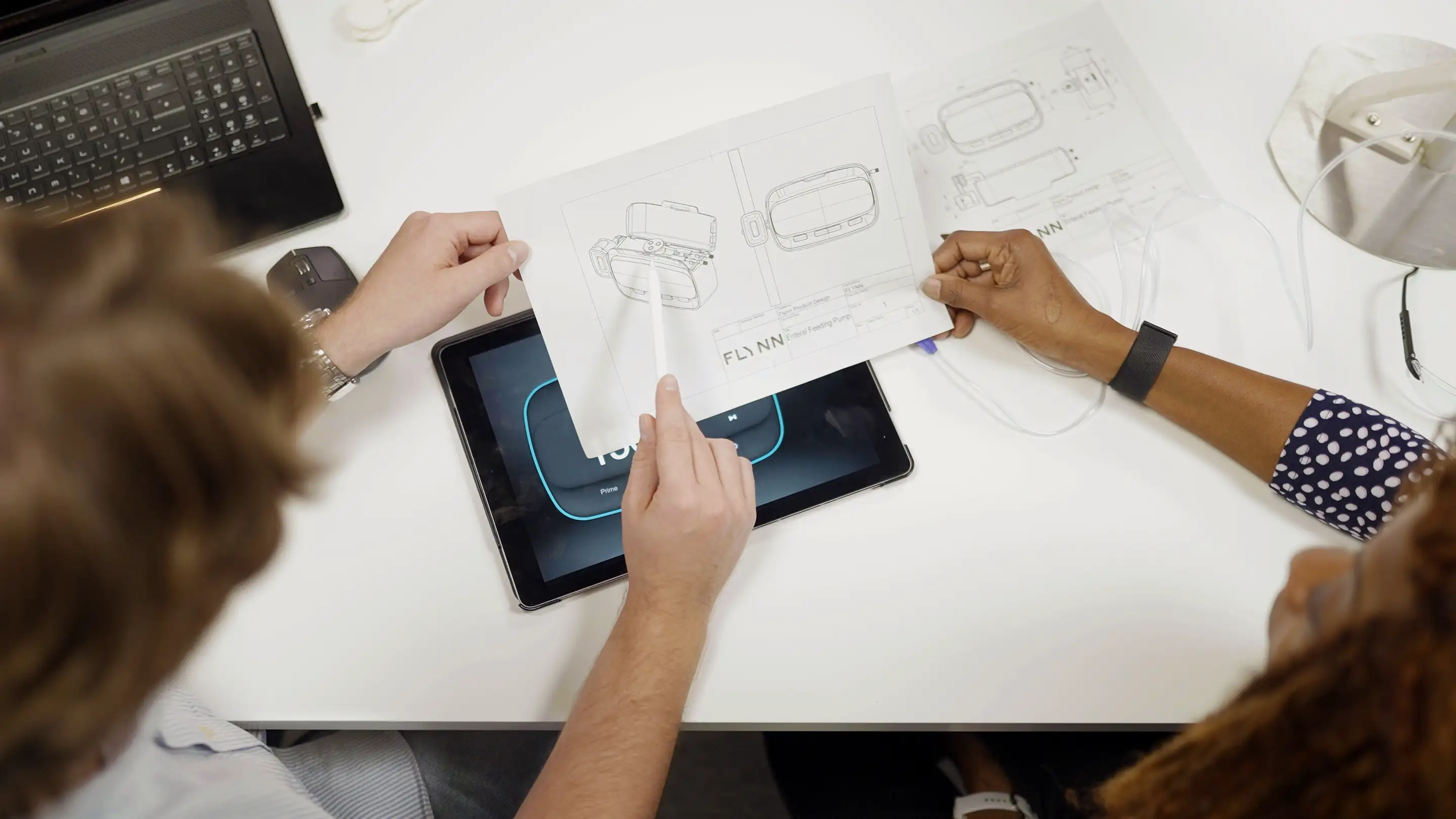
For companies with established design or engineering teams, a consultancy works best as an extension of that team rather than a replacement for it.
Handling overflow is one reason companies bring us in. Workloads in product development are rarely steady. A major launch, a new product line or an unexpected redesign can stretch an internal team well beyond its capacity. External support for those peaks means the work gets done without hiring permanent staff who may not be needed once things settle. Capacity scales up when the project needs it and back down when it doesn't.
Specialist skills are another. Your in-house team might be strong on engineering but lighter on industrial design, or the other way round. A consultancy can fill that gap for a specific project.
Then there's the outside view. Even a strong internal team benefits from someone asking different questions, and some companies bring in a consultancy specifically to challenge an internal concept or explore directions their own team is too close to see.
The relationship works best when it's collaborative. The in-house team knows the product, the users and the business. We bring a different perspective and a wider range of experience. Put together, that usually produces a better result than either could manage alone.
When in-house can be the better choice
There are situations where an in-house designer is the right call, and it's worth being clear about them.
If your work is mostly continuous, incremental improvement to an existing product range, an in-house designer who knows those products inside out will usually be more efficient. The same applies to a steady flow of small changes, such as variants, updates and component substitutions, where briefing an external team each time doesn't make sense.
Long-term product knowledge has real value too. Someone who has lived with a product for years understands its history, its users and its quirks in a way an outside team needs time to learn.
This is exactly why a hybrid model works so well for many companies. In-house people provide continuity and handle the day-to-day work, while external support comes in for new products, fresh thinking and peaks in demand.
The most common mistake: bringing a consultancy in too late
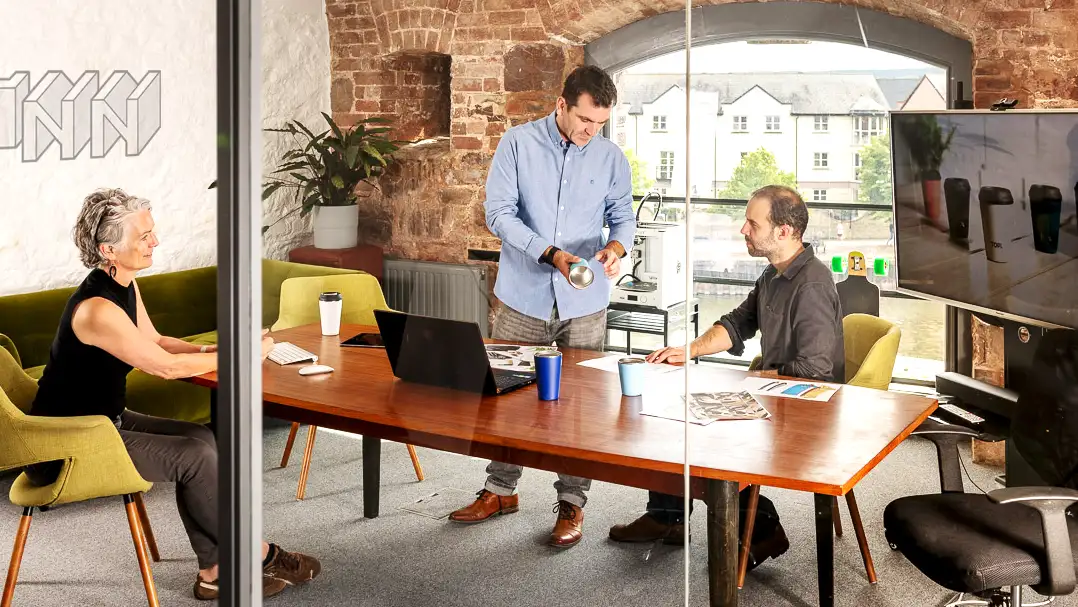
In our experience, the biggest missed opportunity isn't choosing the wrong option. It's timing.
Companies often bring in a consultancy once a project is already in trouble. Costs have crept up, the product isn't performing as expected, or manufacturing problems have surfaced late in development. We can help at that stage, but by then many of the important decisions have been made, and changing them is slow and expensive.
The greatest value an external team brings is at the start. That's when an outside perspective can question the brief, test assumptions about the user and the market, and shape the product before its architecture is locked in. Decisions made early in development have a large influence on what a product will eventually cost to make and how well it performs, so getting them right at the beginning is far cheaper than correcting them later.
If you're planning a new product, the beginning is the best time to bring in outside thinking, even if it's a short piece of early-stage work alongside your own team.
Finding the right balance
Choosing between an in-house designer and a product design consultancy comes down to the type of work you're doing, the skills you already have and how much fresh thinking the project needs. For most companies, the answer is some combination of the two.
At Flynn, we've spent over 25 years helping founders, startups and established companies develop physical products from concept through to manufacture, both alongside in-house teams and as the full design function. If you're weighing up how to resource your next product, we'd be happy to talk it through.
We provide businesses with product design consultancy, industrial design, prototype design & related services.