.avif)
What Makes a Hardware Startup More Investible
Investibility is about far more than a polished pitch deck. It begins much earlier, often before development has formally started. Some of the most influential decisions are made at the point where the brief is written and the product specification takes shape.
What can feel like minor choices at that stage go on to define the entire product development journey. Their impact compounds over time. Like a laser adjusted by a single degree, the change may seem negligible at one meter, yet at a mile the destination is completely different.
Investors understand this. They rarely make decisions lightly. Instead, they look for signals embedded deep within the product itself, clues that reveal whether it has the fundamentals required to succeed. Through the product, investors assess the team behind it: how they think, how they manage risk, and how seriously they engage with the realities of bringing something physical into the world.
When teams understand what builds investor confidence, they can begin designing for investibility from day one. At that point, investibility stops being something you argue for at the end of the process and becomes something built into the product’s core.
Why Physical Products Are Judged Differently
Capital behaves cautiously around physical products for good reason. Unlike software, mistakes are expensive, slow to correct, and often locked in early:
- A poorly considered material choice can echo through manufacturing costs
- An overlooked regulation can stall a launch indefinitely
- An optimistic assumption about scale can collapse under the weight of tooling reality
This doesn’t make physical products less attractive investments. It raises the bar on evidence. The more tangible the product, the more tangible the proof needs to be.
Clarity of Purpose Shows Early
Investable products tend to be remarkably clear about why they exist. That clarity shows up in form, function, and restraint:
- A clearly defined problem
- A specific user and context
- The problem being solved is specific.
- The user context is well understood.
- Features feel intentional rather than accumulated.
When purpose is sharp, design decisions become easier to read. Investors can trace a line from need to solution without filling in gaps themselves. That coherence reduces cognitive load and builds confidence, often subconsciously.
Clarity also limits scope creep. Products that attempt to be everything at once tend to broadcast uncertainty rather than ambition.

Genuine Demand and Real-World Relevance
Investable physical products are anchored in a problem that exists outside the studio or workshop. Evidence of genuine demand reassures investors that the product is responding to real behaviour, not hypothetical interest.
This demand can show up in different ways:
- Users actively seeking workarounds
- Existing solutions being misused to fill a gap
- Buyers already spending time and money to solve the problem imperfectly
- What matters is that the need is observable and persistent.
Products grounded in real-world relevance tend to arrive with clearer positioning and fewer assumptions. They reduce the risk that the market needs to be educated before it can even begin to care.

Managing Risk as a Design Discipline
Risk management in physical product development is most effective when it is proactive and visible. Choices around materials, suppliers, manufacturing routes, and certification all communicate how the team anticipates uncertainty.
Investable products tend to show staged thinking: testing assumptions early, isolating high-risk elements, and addressing them before scale magnifies their impact. This approach suggests control without rigidity.
Rather than avoiding risk completely, strong teams demonstrate that they know where it lives and how they intend to control it.
Evidence Carries More Weight Than Enthusiasm
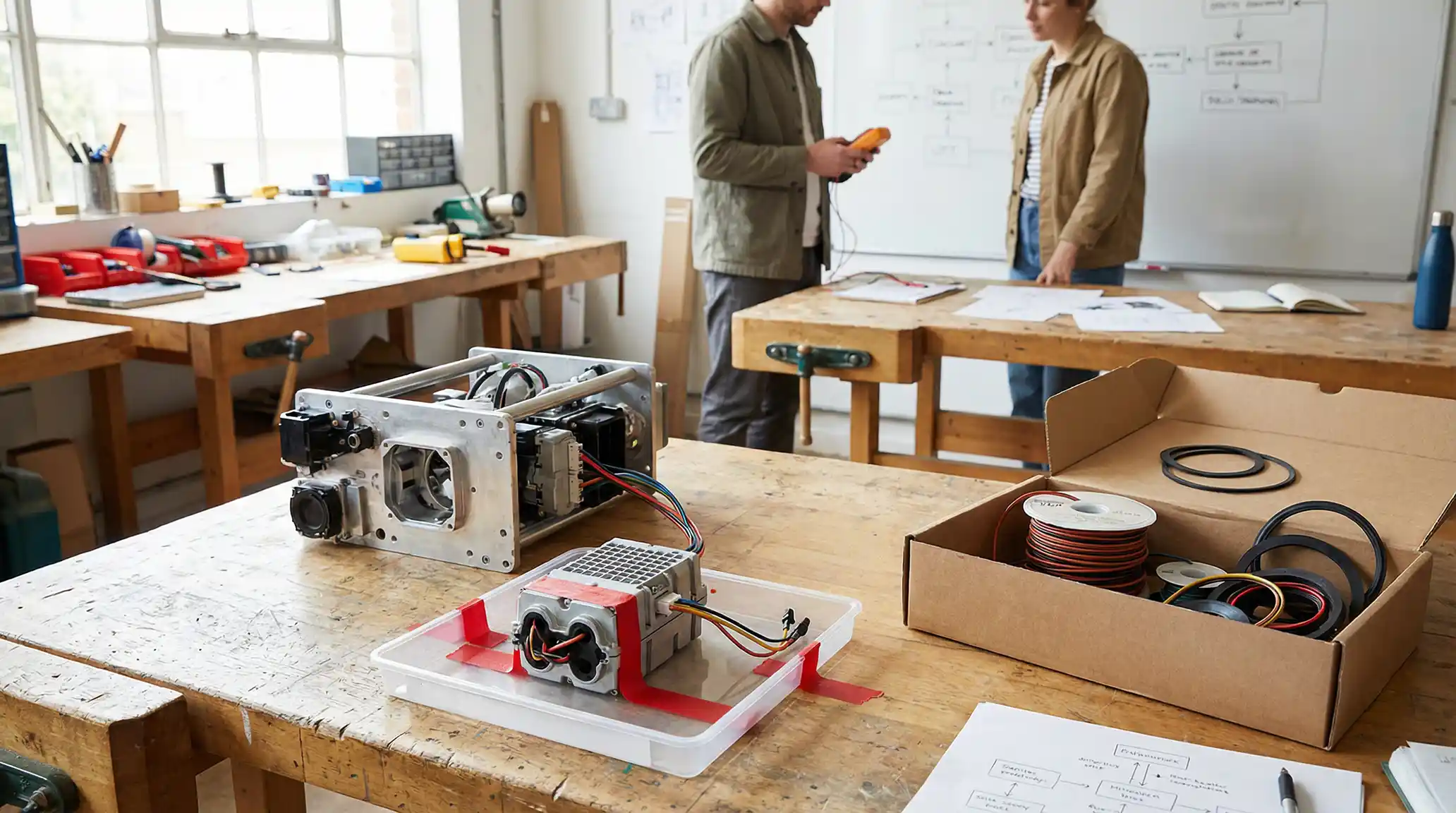
Passion matters, but physical products live or die on proof. Prototypes are one of the strongest investibility signals when they are used well. There are many types of prototpyes and often it doesn’t have to be finished looks like prototypes, proof of concept working prototypes can be enough to validate the product works.
Functional prototypes that have been tested in real conditions reveal far more than polished visuals. Functionality, failure points, assembly challenges, and user behaviour all surface valuable truths. These insights show that the team has moved beyond imagining success and into reality.
Even early conversations about manufacturing can carry weight. Evidence that suppliers have been consulted, processes explored, and constraints acknowledged suggests a venture grounded in how things are actually made.
Timing the Investment Conversation
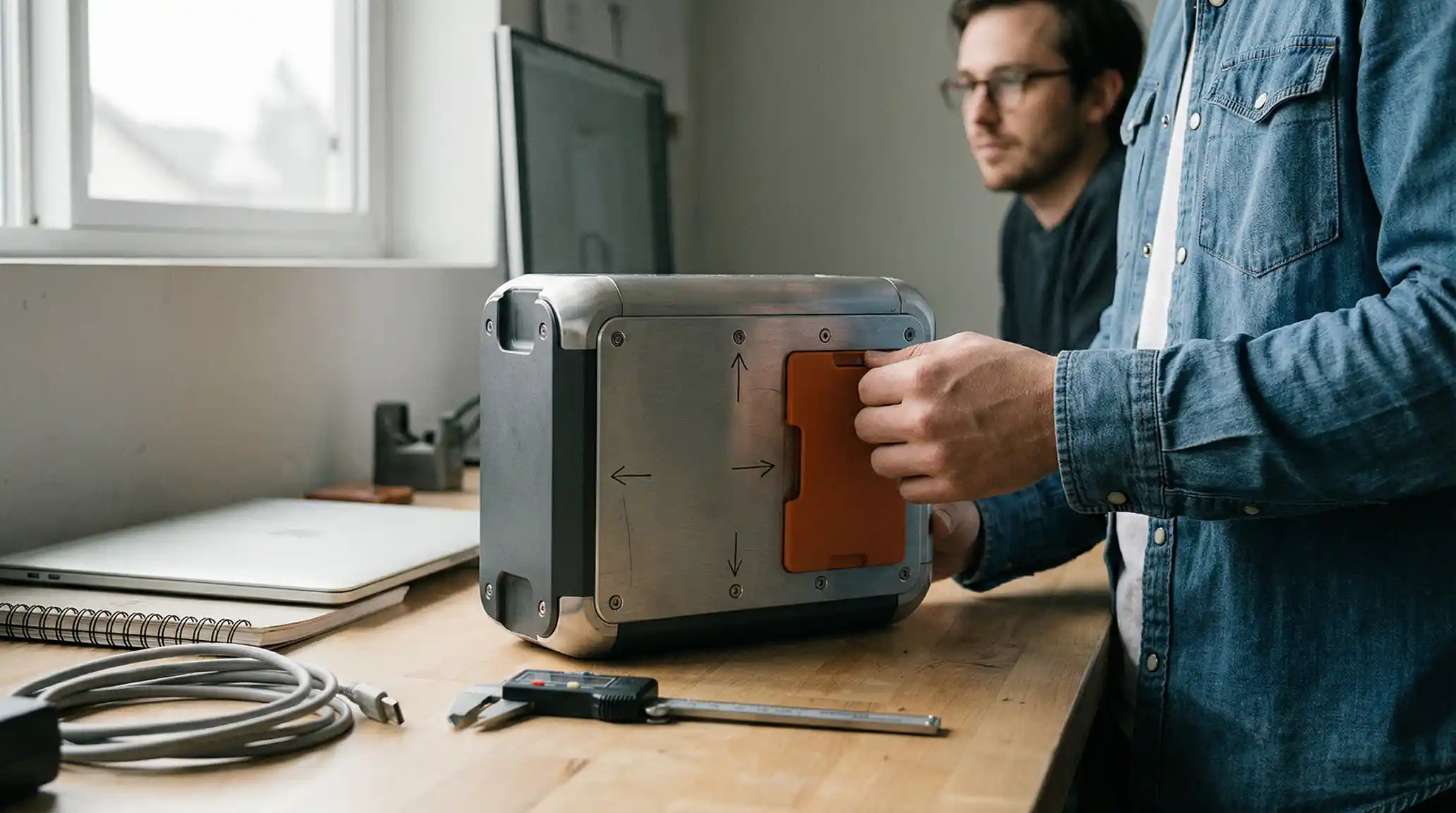
When teams approach investors matters almost as much as what they show them. The strongest conversations tend to happen once something tangible exists, when the product has moved beyond a loose idea and into a form that can be seen, handled, and discussed with confidence.
In an ideal world, teams arrive with evidence gathered through a real development process:
- A defined product concept that has been designed, not just described
- Proofs of concept or early prototypes that demonstrate feasibility
- A clear view of manufacturing routes and likely unit costs
- Early insight into risks, constraints, and trade-offs
This level of readiness allows investors to engage with the product itself, rather than trying to imagine it. It shifts the conversation from speculation to assessment.
Of course, physical product development is expensive, and fully developing a product before seeking investment is not always realistic. In those cases, a strong starting point is an investment-focused development phase, one that builds credible pitch materials grounded in design and engineering thinking.
By visualising how the product will look, function, and be manufactured, teams avoid pitching abstract ideas. Instead, they present a concept that can be understood, questioned, and believed in. That tangibility often makes the difference between interest and hesitation.
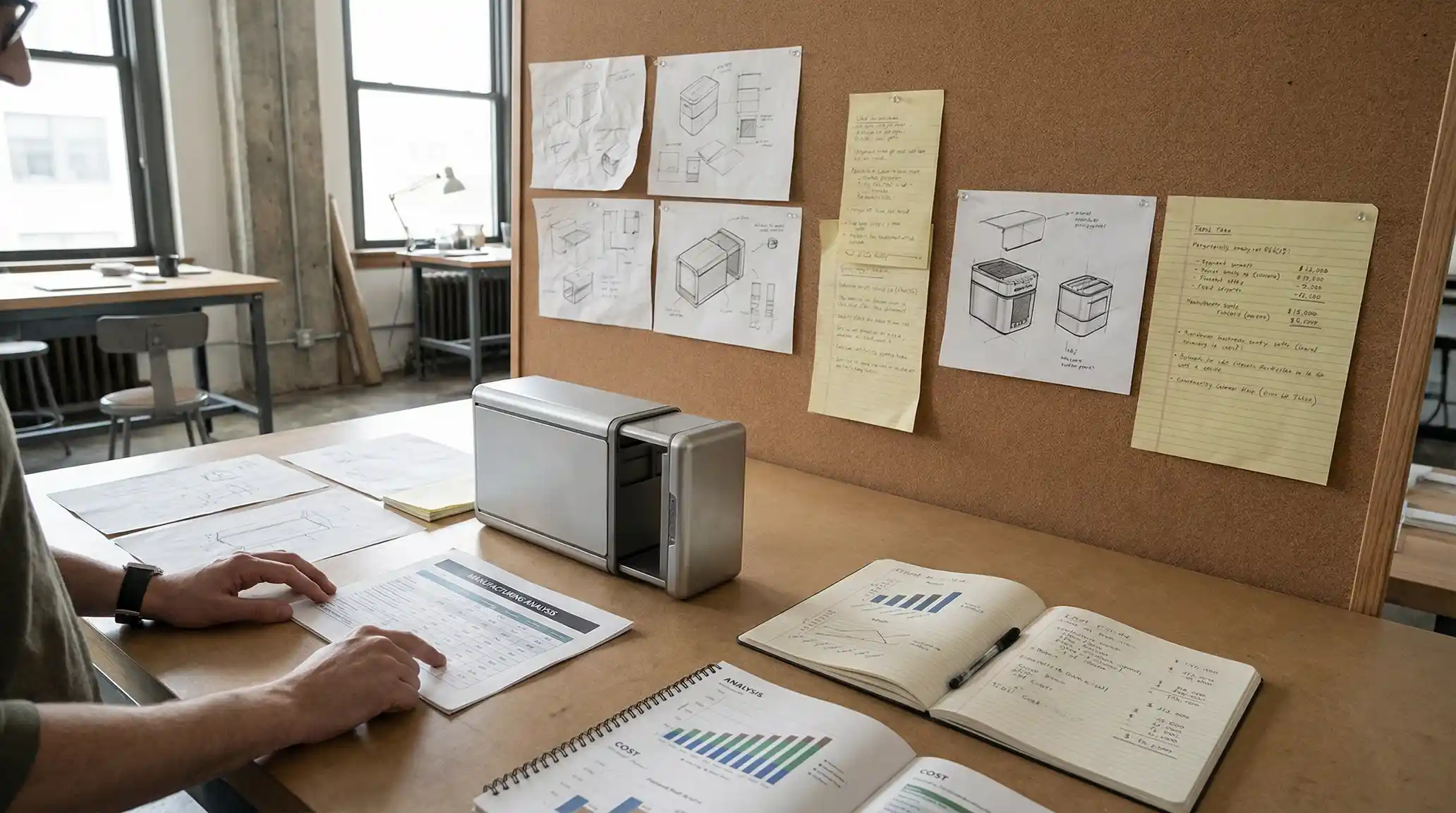
Serious Ventures Bring in Serious Partners
Physical product development is rarely a solo endeavour. When experienced industry professionals are involved early, it sends a strong signal about intent and maturity.
Designers, engineers, manufacturers, and regulatory specialists each bring pattern recognition earned through repetition:
- Reducing blind spots
- Accelerating learning cycles
- Challenging assumptions early
- More importantly, it shows that the founding team values expertise over ego.
Investors pay attention to this. A team that knows when to bring in help is often better equipped to navigate uncertainty than one attempting to carry every decision alone. Working with credible partners suggests an understanding of complexity and a willingness to be challenged.
It also hints at how the team will behave post-investment. Products intended to last are rarely built in isolation.
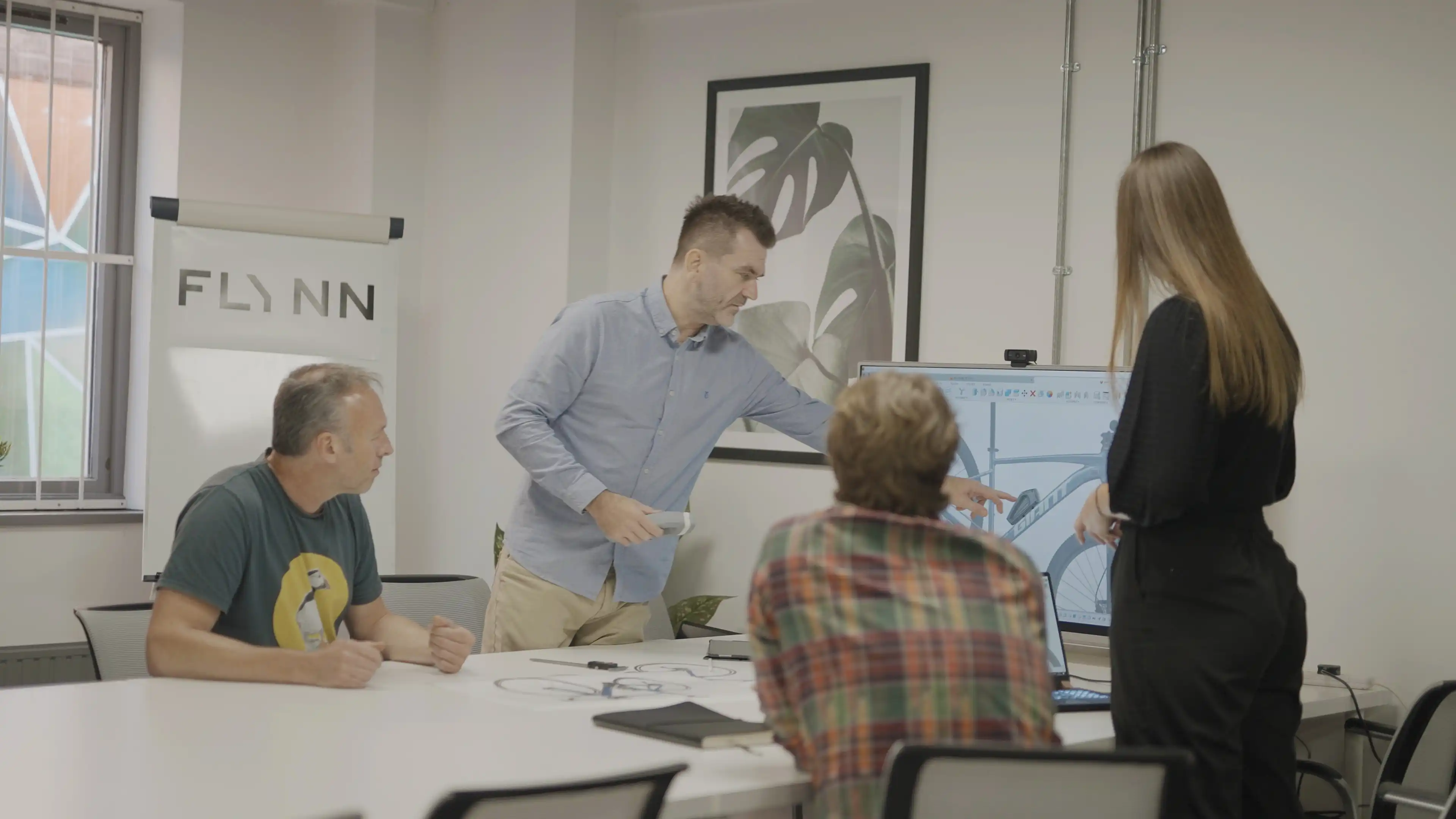
Designed-for-Scale Thinking Builds Confidence
Scaling a physical product is not a future concern. It is a constraint that shapes early decisions, whether acknowledged or not. Products that show awareness of scale and DFM tend to feel calmer and more credible.
This can appear in small but telling ways:
- Parts designed for efficient assembly
- Materials chosen with supply availability in mind
- Form factors aligned with standard processes These choices suggest foresight rather than optimism.
Investors look for signs that the product will behave predictably as volume increases. Predictability is reassuring. It reduces the sense of unknowns waiting beyond the next milestone
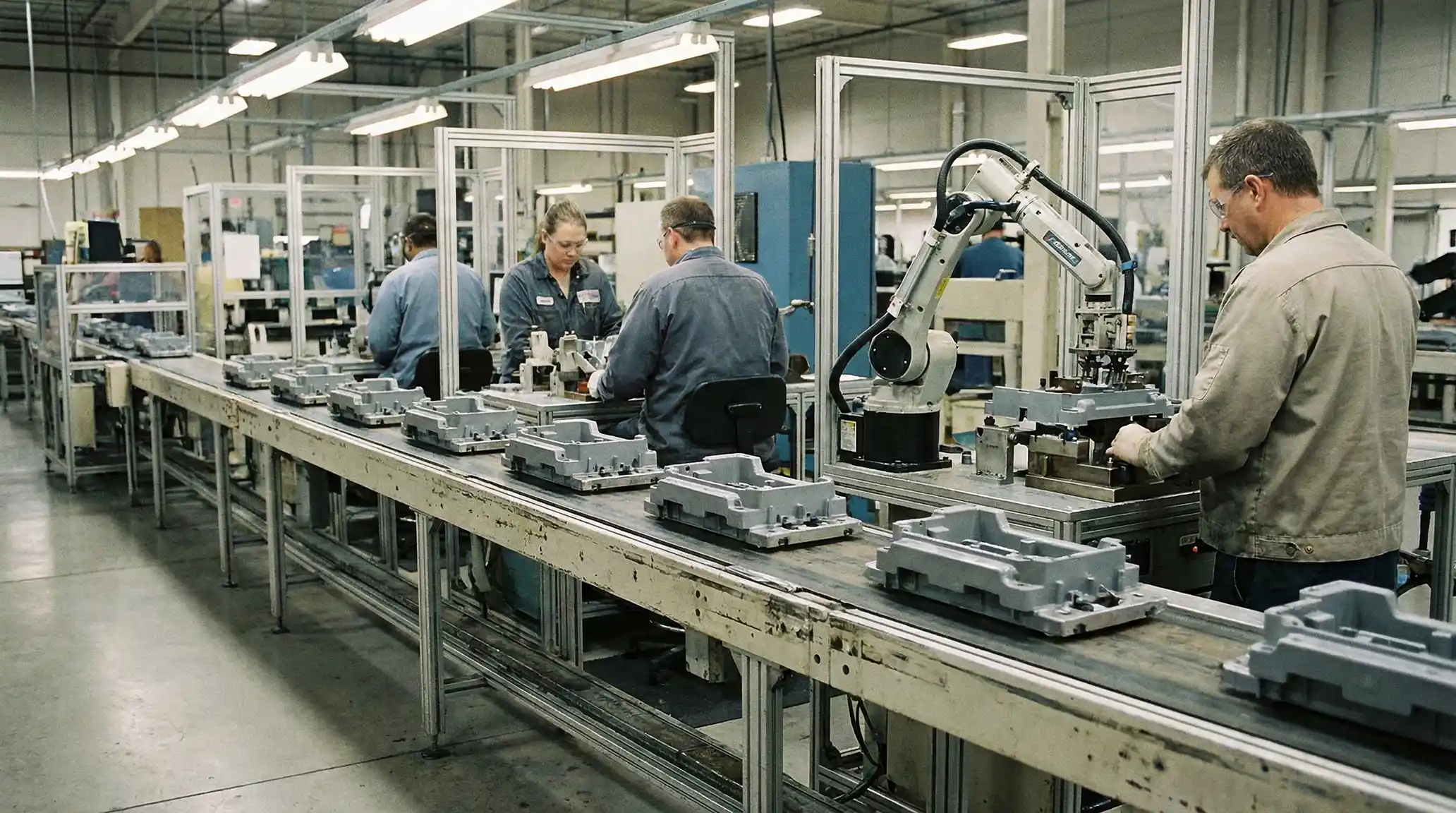
Responsible Economics Are Designed In
Every physical product carries an economic story embedded in its design. Bill of materials discipline, production costs, and thoughtful trade-offs between quality and cost all shape that story.
Products that feel over-engineered can raise questions about margin pressure. Those that feel fragile prompt concerns about returns, warranty exposure, and brand damage. Investable products tend to sit in a thoughtful middle ground, where performance, longevity, and cost support one another.
These decisions demonstrate an understanding that financial health and design quality are not opposing forces. When handled well, they reinforce each other

What Investors Are Really Assessing
Behind every term sheet is a judgement call about trust. Investors are looking for fewer surprises, not bigger promises. They want to see teams who understand consequences and make decisions accordingly.
Physical products communicate this clearly. Every detail, from prototype quality to partner selection, contributes to a picture of how the venture operates under pressure.
Let the Product Carry the Story
Pitch decks articulate intent. Products demonstrate capability. The most investable physical products carry much of the persuasion themselves, quietly revealing that the team understands what it takes to bring something into the world responsibly.
When design is used as a tool for clarity, evidence, and risk reduction, investability follows naturally. The product stops being an idea that asks for belief and becomes something that earns it.
Designing for investment also has value beyond fundraising. The qualities investors look for, clear purpose, real demand, considered risk, and readiness to scale, are the same qualities the market responds to. A product built to be investable is one built to endure, with the fundamentals in place to succeed long after launch.
We provide businesses with product design consultancy, industrial design, prototype design & related services.